
Poly-B Plumbing in BC: Is Your Home a Ticking Time Bomb?
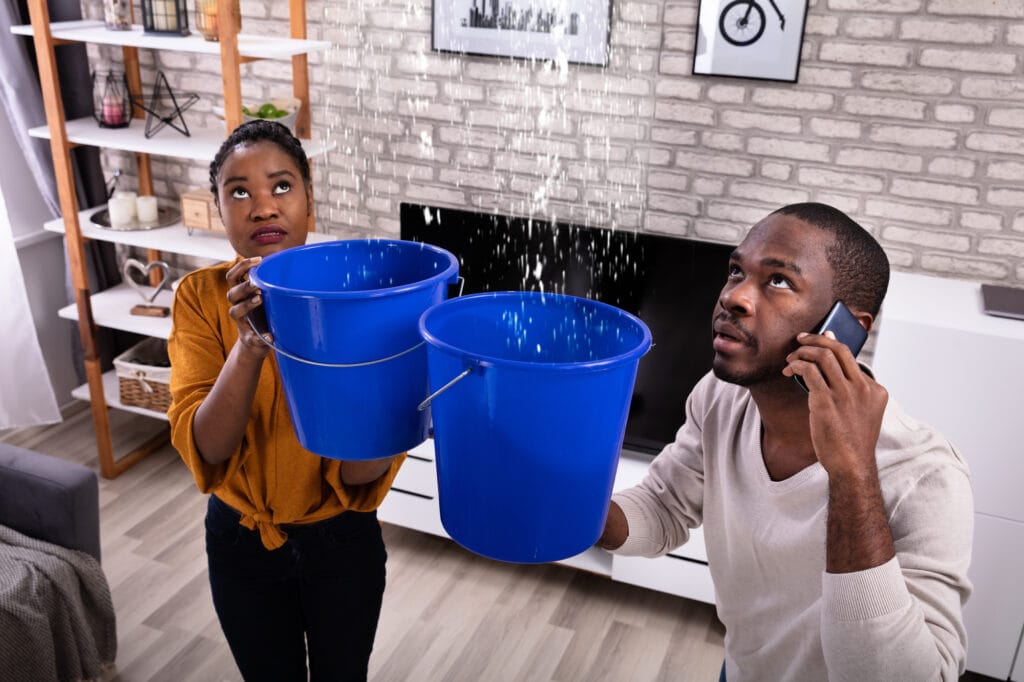
Somewhere in your house, hidden behind the drywall, there’s a ticking time bomb. It’s gray, plastic, and for the last 30 years, it’s been the most hated material in real estate. If your home was built between the late ’70s and 1995, you probably have Poly-B in your plumbing system.
Many people say it is a guaranteed flood, but we just found out that the experts might be exaggerating the danger. The actual cost to stay safe is not what you think. Here, we’ll do a full plumbing autopsy to find out why this pipe is so terrifying for homeowners and homebuyers.
Our goal is to separate the fear from the reality and look at the options to get ahead of it. We want to help you make the right move with confidence.
Most home buyers FAIL this quiz.
Will you?
What is Poly-B Plumbing and Why is it Failing?
Polybutylene, or Poly-B, is a gray, flexible plastic pipe. To understand why it is in your walls, you have to look at the construction boom of the ’80s and ’90s. This was a major era for development in the BC Lower Mainland.
Developers were desperate for a material that was cheaper than copper and faster to install. Poly-B was called the miracle pipe because it was flexible. Plumbers could snake it through joists without needing dozens of expensive elbow joints.
Between 1978 and 1995, it was installed in roughly one out of every four new homes across North America. If you live in a suburb in Surrey, Langley, or White Rock built in that window, there is a massive chance it is in your house.
Fact: Poly-B has a fatal chemistry flaw. It hates chlorine. Municipal water providers use chlorine to keep water safe, but it causes a chemical reaction that oxidizes the plastic from the inside out.
The Inside-Out Decay
Imagine a rubber band that has been sitting in the sunshine too long. It looks fine until you touch it, and then it just snaps. That is what is happening inside your walls.
The pipe becomes brittle and develops microscopic cracks. Eventually, the structural integrity vanishes. Because it rots from the inside, a pipe can look brand new on the outside just minutes before it bursts. This led to a massive class action lawsuit in 1995, which killed the product’s use in Canada.
Why the Panic? The Real Estate “Boogeyman”
On local BC subreddits, the first comment on a beautiful home is often, “Wait, is that Poly-B? Run!” It’s the boogeyman of home buying. We have seen buyers walk away from dream houses the second an inspector points a flashlight at a little gray pipe.
The panic comes from the horror stories. A family goes away for a weekend, a fitting cracks, and they come home to a waterfall coming through the kitchen ceiling. This can lead to hundreds of thousands of dollars in damages and a battle with an insurance company that may not cover it.
Buyers do not just see a plumbing issue. They see a financial catastrophe. They hear rumors that you cannot get a mortgage or that the house is a lemon. Sellers are terrified to list because they think they will have to drop their price by $50,000.
The City of Surrey has various plumbing services available to you. Check them out!
Is Copper Actually Safer?
People see Poly-B and hear sirens, but every home buyer has a budget. If your budget puts you in a home built between 1978 and 1995, almost every other home in that community has the same challenge.
Many believe copper is better, but copper from 1995 is not necessarily safe. The estimated lifespan for Poly-B was about 25 years, meaning a 1995 home hit that date around 2020. Builders at that time often used Type M copper, which was the thinnest and cheapest available.
Quick Stat: Type M copper has an expected life of 20 to 50 years and is susceptible to pinhole leaks that can be just as damaging as Poly-B.
In the Lower Mainland, our water can be slightly acidic. Over the years, that water eats away at the solder used to join copper pipes. We are now seeing “solder decay,” where the joints literally start to weep and leak. Whether it is gray plastic or copper, if the house is from the mid ’80s or early ’90s, the plumbing is reaching its expiration date.
The Insurance Myth vs. Reality
One thing that catches people off-guard is insurance. Many homeowners never told their company they had Poly-B. If they have a claim, they could be completely uncovered.
We decided to stop listening to the rumor mill and actually called a plumber and an insurance broker. We were floored by what we found:
- Replacement Cost: A plumber told us a full re-pipe and the resulting damage to walls could cost between $15,000 to $30,000.
- The Insurance Secret: We got a quote for a 3,200 square foot townhome in White Rock. The surcharge for Poly-B versus copper was only $40 a year.
- Availability: Tens of thousands of homes in our community have Poly-B. Most insurance companies are aware of it and are insuring these properties.
In 2026, many providers realize that if a house has stood for 30 plus years without a leak, the risk is manageable as long as you are honest.
Pro Tip: Do not be vague with your broker. Ask the “magic question”: What is your specific surcharge for Poly-B, and what does it do to my water damage deductible? When it comes to cost estimates related to replacement of Poly B or insurance premiums, always be sure to do your own due diligence.
Did you know? Regular depreciation reports in BC strata are becoming the norm. Check out our video on recent BC strata updates for more.

Your 3-Step Game Plan for Poly-B
If you’re a buyer, use this information as a scalpel, not a hammer. Don’t use it to kill the deal. Use it to negotiate.
- Identification: Go to the mechanical room or under the sink. Look for the Poly-B stamp or the code PB2110. That is your leverage.
- The Insurance Pre-Flight: Before you remove your subjects, call your insurance broker. If the surcharge is only $40 or $50, the deal-breaker just became a simple line item in your budget.
- The Negotiation: Get a quote for a re-pipe. Use that quote to negotiate the purchase price down. That way, you’re essentially getting the seller to pay for your replacement plumbing system.
For sellers, you have two choices: re-pipe before listing, or arm yourself with facts. Get a plumber’s professional assessment on paper. Having facts allows for an intelligent conversation rather than letting a buyer’s imagination run wild.
Poly-B is a quantifiable risk. Once you know the cost of the insurance and the replacement, the boogeyman disappears.
Ready to buy or sell, but still wary of this real estate boogeyman? Let’s chat.
Most home buyers FAIL this quiz.
Will you?
People lose money in real estate because they don't know what's actually happening.
Our YouTube channel fixes that.
We show you what most agents won't – what's really happening in Surrey & White Rock, and how to win whether the market's up or down.
It's free. No fluff. All signal.
Subscribe now — or stay guessing.
